

What Makes a Bourbon Expensive? 10 Factors That Affect Bourbon Prices (2026 Guide)

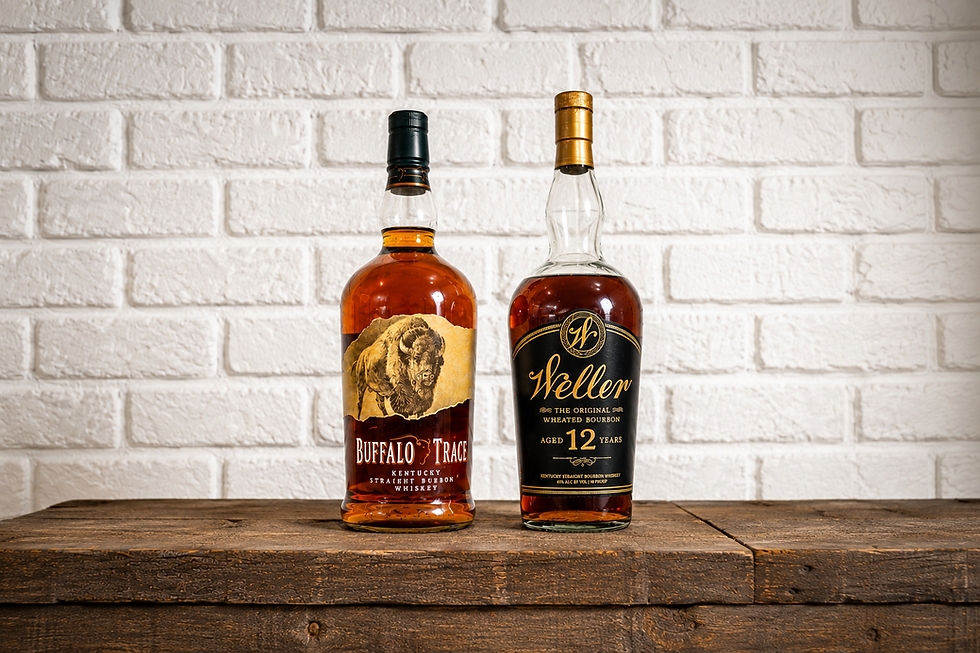
Walk into any liquor store and you'll find bottles of bourbon ranging from $30 to well over $500. Browse online auctions, and some limited releases can sell for thousands of dollars.
It raises an obvious question: What actually makes a bourbon expensive?
Is it the age? The ingredients? The distillery? Or is it simply because everyone wants the same bottle?
The truth is that bourbon pricing is far more complex than most people realize. While older age and limited production can certainly increase a bourbon's value, they're only part of the story. Brand reputation, barrel selection, awards, marketing, and even social media hype all play a role in determining what you'll pay for a bottle.
The good news is that an expensive bourbon isn't always a better bourbon.
In fact, we've reviewed plenty of bottles here at Waylon's Bourbon Shelf that outperform bourbons costing two or three times as much. Understanding what drives bourbon prices can help you make smarter buying decisions, avoid overpaying for hype, and discover incredible value bottles that deserve a place on your shelf.
In this guide, we'll break down the biggest factors that influence bourbon prices and explain when a premium bottle is worth the extra money—and when it isn't.
Why Do Bourbon Prices Vary So Much?
Unlike many other spirits, bourbon can vary dramatically in price. It's not unusual to see one bottle selling for $40 while another from the same distillery costs $150 or more.
That's because every bourbon is unique.
The amount of time it spends aging, the barrel it comes from, how many bottles are produced, and even where you buy it can all have a significant impact on price.
For Canadian bourbon drinkers, there are even more factors at play. Import costs, provincial liquor boards, taxes, and exchange rates often make the same bottle noticeably more expensive than it would be in the United States.
Understanding these differences is one of the best ways to become a smarter bourbon buyer.
What Makes a Bourbon Expensive?
Before we dive into the individual factors, it's important to understand one thing:
No single characteristic determines a bourbon's price.
A 12-year bourbon isn't automatically more expensive than an 8-year bourbon.
A limited release isn't always better than a shelf staple.
And a bottle with a premium price tag doesn't guarantee a premium drinking experience.
Instead, bourbon pricing is usually the result of several factors working together.
Let's look at the biggest ones.
1. Age Statement
If there's one thing most bourbon drinkers associate with expensive whiskey, it's age.
And for good reason.
A bourbon that spends 10, 12, or even 15 years inside a barrel requires a significant investment from the distillery long before it ever reaches store shelves.
Unlike vodka or gin, bourbon can't simply be produced and sold a few weeks later.
Every extra year a bourbon spends aging ties up warehouse space, inventory, and capital.
That alone increases the cost.
But there's another reason older bourbon becomes more expensive.
The Angel's Share
Every year a bourbon sits in a barrel, a portion naturally evaporates through the wood.
This evaporation is known as the Angel's Share.
Depending on the climate and warehouse conditions, a barrel can lose anywhere from 2% to 5% of its contents every year.
That means a barrel filled today will contain considerably less bourbon ten or fifteen years from now.
Fewer bottles produced means higher production costs per bottle.
Does Older Always Mean Better?
Not necessarily.
While age often adds complexity, richer oak character, and a longer finish, too much time in the barrel can overpower the sweeter notes that make bourbon enjoyable.
Some bourbons reach their peak after eight years.
Others continue improving well beyond a decade.
Age is simply one piece of the puzzle.
A well-balanced 8-year bourbon can easily outperform an over-oaked 15-year bourbon.
That's one reason bottles like Russell's Reserve 10 Year and Eagle Rare 10 Year are often considered exceptional values—they offer mature flavor without demanding luxury prices.
2. Barrel Quality and Selection
Not every bourbon barrel is created equal.
Even when two barrels are filled on the same day using the exact same recipe, they can taste surprisingly different years later.
Why?
Because every barrel ages differently.
Its location inside the warehouse, temperature fluctuations, humidity, airflow, and countless other environmental factors influence how the bourbon matures.
This is why distilleries spend enormous amounts of time tasting barrels before deciding which ones deserve premium labels.
Single Barrel vs Small Batch
One of the biggest factors affecting price is whether a bourbon comes from a single barrel or a small batch.
Single Barrel
Every bottle comes from one carefully selected barrel.
No blending.
No adjustments.
If that barrel is exceptional, the resulting bourbon can be outstanding.
Because only a limited number of bottles come from each barrel, production costs are naturally higher.
Small Batch
Small batch bourbons blend whiskey from several carefully chosen barrels.
The goal isn't rarity.
It's consistency.
Master distillers carefully combine barrels to create a balanced flavor profile that tastes similar from bottle to bottle.
While small batch bourbons can still be premium products, they're generally easier to produce than single barrel releases.
3. Limited Production
One of the simplest laws of economics is supply and demand.
When a distillery produces fewer bottles than consumers want to buy, prices naturally increase.
Many premium bourbons are intentionally produced in limited quantities.
Some are annual releases.
Others are one-time experiments.
Some come from a single warehouse or a handful of exceptional barrels.
Once they're gone, they're gone.
That scarcity creates excitement—and often higher prices.
Why Distilleries Release Limited Editions
Limited releases aren't always marketing gimmicks.
Sometimes they're the result of:
Older barrels reaching maturity
Experimental mash bills
Unique barrel finishes
Anniversary celebrations
Special warehouse selections
These releases often require years of planning, making them more expensive to produce.
However, limited production alone doesn't guarantee better flavor.
Sometimes a readily available bourbon delivers just as much enjoyment.
4. Allocation and Scarcity
If you've spent any time searching for bourbon, you've probably heard the word allocated.
But what does it actually mean?
An allocated bourbon is one that a distillery distributes in limited quantities to retailers because demand exceeds supply.
Instead of every liquor store receiving as much inventory as they want, stores receive only a small allocation.
Examples include bottles like:
Blanton's Original
Eagle Rare 10 Year (in many markets)
Weller Antique 107
E.H. Taylor Small Batch
Allocation doesn't necessarily mean these bourbons are dramatically better than readily available bottles.
It simply means there aren't enough bottles to satisfy demand.
As a result, prices often increase—not because production costs are higher, but because consumers are willing to pay more.
Scarcity vs Quality
One of the biggest misconceptions in bourbon is that rare automatically means better.
It doesn't.
Some allocated bourbons are exceptional.
Others have simply become difficult to find because demand exploded after positive reviews, awards, or social media attention.
We've found that many shelf staples deliver comparable quality without the frustration of chasing limited releases.
Before paying a premium, ask yourself: Am I paying for exceptional bourbon, or am I paying because it's hard to find?
The answer can save you a significant amount of money.
5. Brand Reputation
Not all bourbon distilleries are viewed equally.
Some have spent decades—or even centuries—building reputations for producing exceptional whiskey.
That reputation has value.
When consumers see names like Buffalo Trace, Wild Turkey, Four Roses, Heaven Hill, or Maker's Mark, they already have certain expectations about quality and consistency.
Brands with long track records often command higher prices because buyers trust what they're getting.
In many cases, that trust is well deserved.
But reputation can also create demand that pushes prices beyond what the whiskey itself might justify.
That's why it's important to judge a bourbon by what's in the glass—not just the label on the bottle.
6. Awards and Reviews
Winning a prestigious award can dramatically increase a bourbon's popularity—and its price.
When a bourbon earns top honours at competitions like the San Francisco World Spirits Competition, the International Wine & Spirit Competition (IWSC), or receives high ratings from respected publications, demand often rises almost overnight.
Positive reviews from bourbon critics, YouTube channels, and whiskey blogs can have a similar effect. A bottle that was once easy to find may suddenly disappear from shelves after receiving widespread praise.
However, awards don't guarantee that a bourbon will be your favorite.
Taste is subjective. Some drinkers prefer bold, high-proof bourbons, while others enjoy sweeter, more approachable pours. Awards are a helpful indicator of quality, but they shouldn't be the only reason you buy a bottle.
7. Packaging and Presentation
Believe it or not, the bottle itself can affect the price.
Premium bourbons often feature:
Heavy glass bottles
Wax-dipped tops
Decorative labels
Wooden presentation boxes
Custom corks
Numbered bottles
These details create a premium experience and can increase production costs.
A bottle like Blanton's Original, for example, is instantly recognizable thanks to its unique bottle shape and collectible horse stopper.
While beautiful packaging adds to the overall experience, it doesn't necessarily mean the bourbon inside is better.
Whenever possible, focus on the whiskey—not just the presentation.
8. Marketing and Hype
Few industries are influenced by hype quite like bourbon.
Social media has changed the way people buy whiskey. A single viral post, YouTube review, or Instagram recommendation can send demand soaring.
Collectors, influencers, and online bourbon communities have created tremendous excitement around certain bottles, sometimes pushing prices far beyond their original retail value.
This doesn't mean the bourbon isn't good—it simply means popularity often drives prices just as much as quality.
Some of the best bourbons we've ever reviewed receive very little attention, while some of the hardest-to-find bottles don't always justify the premium price.
One of the best ways to save money is to separate genuine quality from internet hype.
9. The Secondary Market
One of the biggest reasons bourbon prices appear so high today has nothing to do with the distillery.
It's the secondary market.
When an allocated bourbon sells out at retail, collectors and resellers often list unopened bottles for two, three, or even ten times their original price through private sales or auctions where permitted by law.
For example, a bourbon with a suggested retail price of $70 may quickly sell for several hundred dollars simply because demand outweighs supply.
This creates the impression that the bourbon is "worth" that amount.
In reality, the whiskey inside the bottle hasn't changed—only the market has.
At Waylon's Bourbon Shelf, we generally recommend judging a bourbon by its retail price rather than inflated resale prices. Many exceptional bourbons remain widely available without requiring you to pay collector premiums.
10. Why Bourbon Is More Expensive in Canada
For Canadian bourbon drinkers, price is influenced by more than just the bourbon itself.
Even bottles that are readily available in the United States often cost significantly more once they reach Canadian shelves.
Several factors contribute to these higher prices.
Exchange Rates
Because bourbon is produced in the United States, Canadian retailers purchase inventory in U.S. dollars. Currency fluctuations can directly impact retail pricing in Canada.
Import and Transportation Costs
Shipping bourbon across the border involves transportation, logistics, and import expenses that are ultimately reflected in the final shelf price.
Taxes and Provincial Markups
Each province has its own pricing structure, taxes, and liquor distribution system.
As a result, the exact same bottle may cost considerably more in one province than another. Many Canadian bourbon enthusiasts compare prices between provinces—or even make cross-border shopping trips—before purchasing premium bottles.
Limited Supply
Canada receives a much smaller allocation of many American bourbons than the United States. When supply is limited, bottles often sell out quickly, making certain releases much more difficult to find.
Is Expensive Bourbon Actually Worth It?
Sometimes.
But not always.
One of the biggest lessons we've learned after reviewing dozens of bourbons is that price doesn't always reflect quality.
Some premium bottles absolutely deserve their reputation.
Others simply benefit from scarcity, collector demand, or years of marketing.
In blind tastings, we've often found bottles like Russell's Reserve 10 Year, Four Roses Small Batch, and Evan Williams 1783 Small Batch competing surprisingly well against bourbons costing considerably more.
Rather than focusing on price alone, ask yourself:
Do I enjoy this flavor profile?
Am I paying retail or an inflated resale price?
Will I actually drink this bottle?
Does it offer good value compared to similar bourbons?
Those questions will almost always lead to better buying decisions than simply chasing the most expensive bottle.
How to Tell if a Bourbon Is Worth the Price
The next time you're standing in front of a liquor store shelf wondering whether a bourbon deserves its price tag, use this simple checklist.
Does it have an age statement?
While not essential, older bourbons often require greater investment from the distillery.
Is it consistently well reviewed?
Look for patterns across multiple trusted reviewers instead of relying on a single opinion.
Is the price close to retail?
Paying suggested retail price usually offers far better value than paying inflated secondary market prices.
Does it match your taste preferences?
A $50 bourbon you love is a much better purchase than a $300 bourbon you rarely reach for.
Would you buy another bottle?
This may be the best question of all.
If you'd happily replace the bottle after finishing it, it probably offered good value.
Final Thoughts
It's easy to assume that the most expensive bourbon on the shelf must also be the best.
In reality, bourbon pricing is influenced by far more than what's inside the bottle.
Age, barrel selection, limited production, allocation, brand reputation, awards, packaging, marketing, and even geography all play a role in determining what you'll pay.
While some premium bourbons genuinely deliver an unforgettable drinking experience, many affordable bottles provide outstanding quality without the premium price tag.
Our advice is simple: Buy bourbon for the whiskey—not the hype.
Build a collection around bottles you'll actually enjoy drinking rather than those that simply generate excitement online.
You'll not only save money, but you'll likely discover some incredible bourbons along the way.
If you're looking for bottles that deliver exceptional quality without breaking the bank, be sure to check out our guide to 5 Bourbons That Overdeliver, where we highlight five of our favorite value bourbons that taste far more expensive than they are.
Happy sipping! 🥃
🚨 New to Bourbon or Looking for Your Next Bottle?
Explore our complete Best Bourbon in Canada (2026 Guide) — a dedicated resource featuring the top bourbons Canadians can actually find, buy, and enjoy.
🥃 Recommended Bottles to Try
Based on this guide, here are some great Bourbon options currently available in Canada:
E.H. Taylor Small Batch Bourbon – Outstanding flavour and a great sipper
Joseph Magnus Straight Bourbon - Highly complex bourbon profile that is extremely smooth and easy-drinking
Blantons Original Bourbon - Premium single-barrel experience, highly collectible and memorable pour
🔗 Keep Exploring Bourbon
If you enjoyed this guide, check out more of our top posts:
Best Bourbon in Canada (2026 Guide): Top Bottles You Can Actually Find – Discover top bottles like Blanton’s, Weller, and Buffalo Trace—plus where to buy bourbon online in Ontario right now
The Ultimate Guide to the Best Bourbon Accessories in Canada (Amazon Finds) - Discover top whiskey glasses, smoker kits, ice molds, and more—plus Amazon Canada buying links.
Where to Buy Bourbon in Canada (2026 Guide for Ontario Bourbon Lovers) - If you're trying to figure out where to buy bourbon in Canada right now, this guide will help.
❓ Bourbon & Whiskey FAQs
Why are some bourbons so expensive?
Bourbon prices are influenced by factors such as age, limited production, barrel selection, allocation, brand reputation, demand, packaging, and market hype. Older or harder-to-find bottles generally command higher prices.
Does older bourbon always cost more?
Generally, yes. Older bourbon requires more years of aging, more warehouse space, and loses volume over time through the Angel's Share. However, older doesn't always mean better.
Is expensive bourbon always better?
No. Many reasonably priced bourbons offer outstanding quality and can compete with bottles costing much more. Flavor preference is often more important than price.
What is an allocated bourbon?
An allocated bourbon is produced in limited quantities and distributed to retailers in restricted amounts because demand exceeds supply. Examples include Blanton's, Eagle Rare 10 Year, and many Weller releases.
What is the biggest factor that affects bourbon prices?
There isn't one single factor. Most bourbon prices are determined by a combination of age, scarcity, demand, production costs, and brand reputation.


Comments